Introduction
I started playing EverQuest on the day it was released to retail. The concept of the game was something that really intrigued me. Had I known what this game would become I'm not sure I would have started in the first place.
I played now and then on the Tunare server, made a few friends that I would regularly group with and had a pretty good time. For reasons I'm not entirely sure of I never really got into it. But the seed was planted, so to speak.
Slowly I logged on less and less until I lost interest completely and cancelled my account. I didn't play for almost a year after that, until the Christmas holidays of what year I cannot seem to recall. There was a new EverQuest server opening up, promising a fun environment for players looking for a fresh start to a new game, or a game that they had forgotten. A feeling I had not felt in almost a year came over me, I wasn't sure why.. but I couldn't resist.
The Beginning
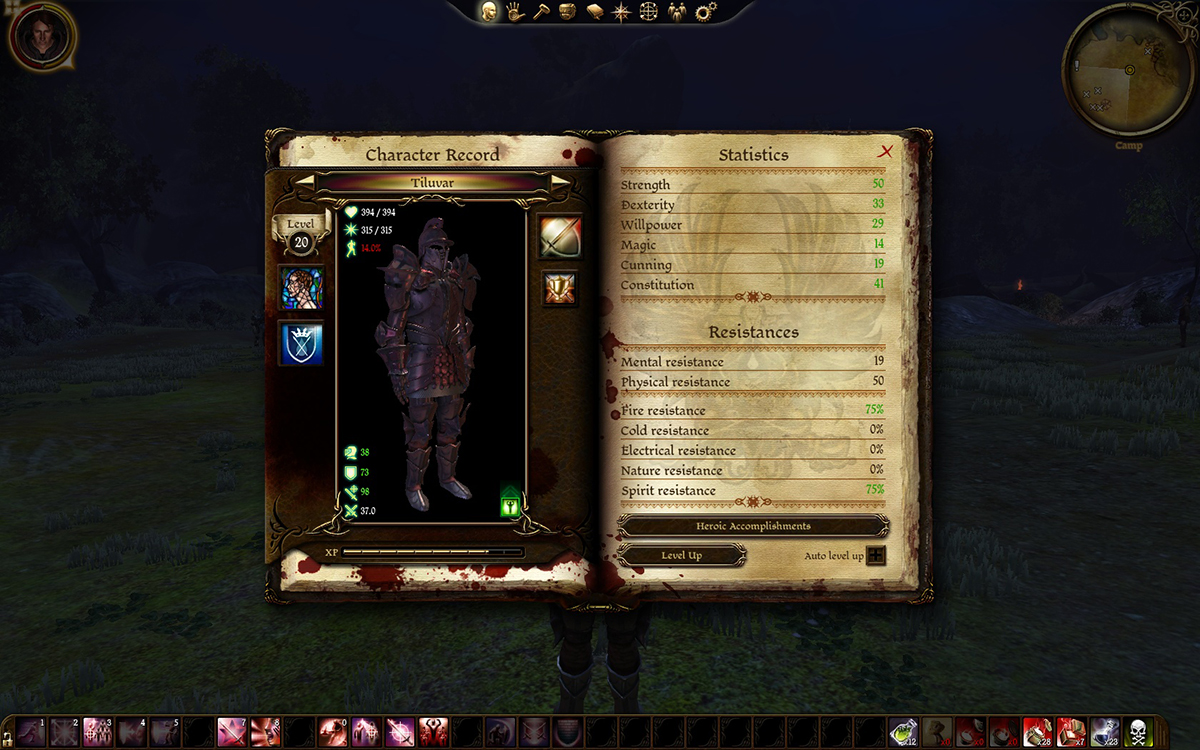
It was then that the game really started for me. I created a Druid named Tiluvar, and for the next 8 years EverQuest consumed a good portion of my life.
There's a simple reason that this time I got hooked, and her name is Drudori. Before your imagination starts running off, this is not a story about love lost over the Internet. Drudori is a happily married woman, to a man named, as I knew him, Troy. Drudori and Troy started on the Luclin server as new players to EverQuest. While I had a few weeks of experience with the game we were all very much "newbies".
I came across the two of them around level 5 or 6 doing their best to kill Orcs outside of Crushbone in the Greater Faydark. This was a simpler time in EverQuest. In later years I would run past anyone below the maximum level without giving them a second thought. But to Tiluvar the level 5 Druid this friendly Enchanter and Cleric duo seemed like decent, trustworthy people to group with.
We had a great time grouping with each other, and it was the first time in an online game that I was really able to see the people I was with as real people, not just players. There is one night in Crushbone that always brings a smile to my face. Troy and I were both after the coveted "Shiny Brass Shield" from an orc known as the Trainer. We spent hours upon hours waiting for the Trainer to appear, killing orcs over and over hoping that the next one to spawn would be the Trainer himself. Finally it did, in the early hours of the morning and in a random roll Troy won the shield. What happened next, even though we were unaware, was the epitome of the guild we would form together. Half asleep Troy stayed with me on a virtual hill until it was light outside, keeping me company and lending me a hand until the Trainer spawned again so that I could get the shield as well. None of these things are more than numbers in a database in California, but the acts that people carry out because of them are what cause me to find Everquest fascinating. I will never forget that.
Over the next few days we grouped together almost exclusively and we were quite the proficient little group, killing many orcs and gaining levels quickly (what I thought was quickly, at the time).
During our groups we got to know several other people. While some were rude, impatient or just not very pleasant we became quite fond of a small Warrior named Tiboutte, and a Ranger named Sylvane. I have no idea how many weeks past, but we played together constantly, often waiting for every member of our small group to log on before beginning on the nights adventures. I started to find myself logging on not to play, but to chat with my friends and although I didn't realize it at the time the fact that I was playing a game started slipping away, I started to consider Everquest a sort of second social life.
Glorious Rising
There are a few months between meeting Tiboutte and Sylvane and the forming of our guild, during which we met several more people who really fit in with the atmosphere we were trying to create. We wanted our guild to be known for being friendly, helpful, and respectful of other players. This may not seem too complicated, but EverQuest has an eerie ability to bring out the greed in people.
I am somewhat surprised as I write this that I have forgotten the names of some of the people that were once so close to me. If you should be in here let me know I would like this to be accurate, and I would love to hear from any of you. I could not forget though, Zeldoran and Graal. To this day I have more respect for these six people I have mentioned than I do for most of the people I have met in real life. So much so that when I needed a shoulder to cry on or advice about something, I found myself logging on Everquest to see who was around instead of reaching out for people in the real world.
Suffice it to say that we were a very tightly knit group, and together we formed a guild named Glorious Rising. It was not a large guild, comprising of the 6 of us as well as a few names I am sure I have forgotten. But it was home.
Drudori was our kind and gentle guild mistress, while Troy, myself, and I believe Graal were Officers. We spent our time grouping together, chatting, and having a great time being in an atmosphere full of friends. It was a memorable occasion when Glorious Rising first killed a Hill Giant as a guild.
The next couple years are a blur. We added many members, always being sure to put them through their paces, making sure that they are the kind of person we want in the guild before inviting them. Because we were so strict about who could join and who could not we ended up with an extremely well known guild on the Luclin server. One anecdote I recall was being asked to hold several thousand platinum worth of items for someone I didn't know so that they could transfer it to their other character. I did so without a second thought, and when the player returned and I gave him the items I asked why he had trusted me with all that money? His answer was simply "Because you're in GR". It was that spotless reputation that we became quite proud of.
Before any of us really realized it, Glorious Rising had transformed from a small group of friends into one of the largest guilds on the Luclin server yet somehow, amazingly, never lost that "family" feeling. We had new applicants almost daily, were holding guild events all the time and everyone was having fun.
Nothing Lasts Forever
GR was a very strong guild. It was one of the oldest and most respected guilds on the Luclin server. Along with the guild Heroes, we helped make the Luclin server a very fun place for the casual players. However, there is more to Everquest than gaining levels.
Although GR was skilled enough to hold small raids, get people epic quest items, and compete with the other casual guilds on the server many members found themselves wanting more out of the game. We started to see people leaving the guild for "Raiding" guilds. While it was sad to lose friends, we went about our business not giving much thought to the raiding scene.
It became painful for me to watch people join GR, come to our small raids, get their epic items and then pack up and leave for raiding guilds. These were people that we spent our time helping and getting to know, only to see them say "Thanks, bye!" the instant they got bored. It started to drain the fun out of the game, not to mention make it harder to become stronger as a guild because just as soon as members would hit the maximum level, they would leave for greener pastures so to speak.
While many of the lower level members didn't mind, and waved fond farewells to the people leaving, I was conflicted. On the one hand I loved my guild and wanted to stick with them no matter what, but on the other hand I was getting tired of putting effort into helping new members achieve their goals only to watch them leave. I was one of only a handful of max level players that were actually sticking around. I couldn't help but feel like a doormat for the raiding guilds. I wanted it to stop, I wanted to quit this game that was causing me to feel frustrated. I didn't even have fun playing anymore I just logged on, helped people get what they wanted, then logged off. I had been a part of something great in the forming of GR and I wanted to leave the game before I turned completely bitter. But I wanted to "finish" before I quit, and that was a fatal mistake.
Although it caused even more tension between me and the people in the guild who I considered my online family, I wanted to see the rest of the game before finally leaving it. I wanted to see the dangerous areas that only the high end raiding guilds could get to. After all I had played this game for years, I might as well see it all before I quit.
With tears in my eyes, and a heavy heart, I met with Drudori and Troy in a secluded location and quietly removed myself from the guild. They were angry that I was leaving, I know now that they didn't hate me, but they hated that I left them.
The next week was dramatic. Angry tells and accusatory conversations were commonplace. For the second time since I started I came to a new level of realization about the game. It wasn't the guild name over your characters head, or the items that mattered. Even though I was still right here and nothing physically had changed, the fact that I would be spending my time with others was what hurt people. It was just a game but these were real emotions, we were all still sitting right where we were the day before, but there was a distance between us now and no matter how many times someone tells themselves "it's just a game" anyone who has been in a similar situation knows very well that it is not. I was missed, and I couldn't help but wonder if this sense of family was found in every EverQuest guild or if it was in fact the atmosphere in Glorious Rising that created it.
A Raider is Born
I wandered guild less for a while. Evaluating my options, chatting with various people who had previously left GR to see how they were doing and after a few weeks I decided to apply to what was then the strongest guild on the Luclin server, Legacy of Sorrow.
Legacy of Sorrow was a stark contrast to GR. They were hated by many players on the server, known for their "us or them" attitude and domination of all things raid related. As many people would tell it they were heartless bastards who compensated for their pitiful real lives by ruining the virtual lives of people in Everquest. Needless to say, I was fairly apprehensive about joining.
I submitted my application shortly after the Velious expansion was released. I don't remember the exact date however a few days after submitting it I was invited to raid with them.
My first raid was in Kael. I remember being so eager to impress and completely new to the high end raiding scene. Mobs were running all over while Neku, the leader of LoS was shouting instructions to the raid in guild chat. I remember struggling to keep up with the pace, it was hard to follow what was going on. Everyone seemed to know exactly what they were doing, in the chaos somehow people were co-operating, people were following the constant stream of instruction and we were winning. I was impressed.
The mobs were coming in non-stop, I barely had time to target things before they were dead, and we were on to the next.
The next thing I know three giants are coming towards us, Neku is screaming detailed instructions and people are carrying them out. There is no delay, no discussion, he is seeing through the disorder of it all and streamlining it for everyone to understand. They trust his direction and the 50 people following one leader become a force to be reckoned with, I remember thinking "This.. is a guild".
Within the next two minutes, we were all dead. I'm not even sure what happened, all I know is that I was summoned and killed before I could even react. Before my feet even hit the floor at my bind spot, people were moving, getting a cleric in to rez us, everyone was headed back without discussion, they had obviously done this many times before. Even in corpse recovery they were coordinated. We got ourselves on our feet, went over a new strategy in guild chat, and attempted the trio of giants a second time. This time, and for the first time on the Luclin server, Derakor the Vindicator was killed. It was a rush, to be one of the first people to see something happen. I knew this was something I wanted to be a part of. My desire to quit the game quickly evaporated as I came to see the game from a completely new angle. Specific people did not matter, what mattered was the guild. It was by understanding this that I began to understand the LoS mentality that caused most of the server to hate them. They weren't bad people, they just put the guild's accomplishments above all else.
I did my best to learn and I learned quickly. I learned to trust Neku even though I didn't really know him. I learned to respect him even though he was cruel. There was a time during preparation for a dragon where we were asked to use junk buffs. I cast a regeneration spell on my group with the intention of using it as a junk buff and was quickly slammed by Neku for putting a useful buff up as junk. I was embarrassed, but I learned.
After a few weeks of constant raiding with LoS, I was invited to the guild after killing Cazic-Thule in the Plane of Fear. It had been a long night, a lot of the guild had logged off to sleep, but some of us stuck it out and took him down. It was that dedication for the good of the guild that they had been looking for.
Shortly after I was invited, I gained an ever greater respect and understanding of how LoS operated. I remember asking in guild chat for help with part of my epic quest and having 4 members of LoS show up no questions asked. After we completed it I thanked each of them profusely to which Deris told me "you've got the tag". The understanding that helping each other indirectly helps everyone in the guild was what made LoS a powerful raiding guild. It was not the same sense of family that I had felt in GR, but it was a strong feeling of camaraderie that made me just as eager to log on, and my thoughts of quitting the game were forgotten.
Raider With a Conscience!?
I raided with LoS night and day through many server firsts, and it was a whole lot of fun. Some very nice equipment was mine, and I felt like I was part of something larger than the individual. Unfortunately, my past life and my current were on a collision course and it would change my path in EverQuest forever.
It was about half a year after I became a member of LoS, I was by no means an old timer but I had earned the respect and friendship of a number of members. I should mention that friendship in a raiding sense is not the same as it was in GR. When you run into an old raiding buddy it is as if you're running into someone you used to work with.. all you really talk about is work (or in this case EverQuest). The conversation never gets much more personal than that. In any event, I was enjoying my time in LoS until we decided to call a Hate raid.
Raiding Hate was nothing new, and certainly not a challenge for us. We could go just about any time we wanted with minimal people and accomplish what we were after. Unfortunately, the day and time we chose to clear Hate would mean that anyone else trying to raid that zone later in the day would find it completely empty. As you have probably guessed, the guild that had a raid planned later that day was Glorious Rising.
To LoS, Hate is just something to do until the real raid, not a big deal at all. I tried my best to get Large (an officer of LoS) to listen as I explained to him that Hate was a huge deal for GR, it was a monthly event and if it was interfered with they would be really disappointed. We could go any other day, did we really have to go now? and I was told something rather typical of Large "I don't give a fuck about your opinion". I'm not a saint, the language didn't bother me. What got to me was that my opinion seemingly meant nothing to Large. As I have stated the opinion of LoS is that the guild is more important than anything and all my experience with that philosophy up until that point had been mostly positive because I was getting what I wanted, we were progressing and things were going well. It was this event that caused me to realize that the guild was indeed greater than everything, greater even than it's own members. I always knew this but having it put to me so bluntly made me see the problem, and see why LoS never had that family feeling.. because to LoS we were not people, we were characters and we were expendable.
The conversation went back and forth and involved several other people. My loyalties were questioned, I was insulted by some and supported by others but in the end LoS went ahead with the raid and I removed myself from the guild right there in the Plate of Hate. Despite what many people said it was not a hasty decision, I was not just looking for an excuse to do it, I loved being part of LoS and it was the last thing I wanted but it was the right thing to do. I returned all my droppable items to the guild and explained my actions on the forums. I am still friends with some members of LoS to this day, and bitter enemies of others.
When the members of Glorious Rising started logging on for their raid only to find the zone mostly empty I was subject to a slew of angry tells. The only reason for which as far as I can tell is that to them I was the face of LoS. It's much easier for them to yell at me than for them to yell at an entire guild. It broke me heart seeing my former guild so angry with me, they were completely unaware that had removed myself from LoS in an attempt to stop it from happening.
A few days passed, the drama subsided and the story of what happened came out. Much of LoS was supportive of my actions (albeit privately). But a lot of them felt I had betrayed them. On the other hand a lot of GR was happy with what I had tried to do for them and apologized for their harsh words. The kindness of my former guild mates reminded me of that place I used to call home, where I was Tiluvar, not just a Druid. Fully aware of how bad it may look to some of the people in LoS, I rejoined Glorious Rising a few days later.
Not So Glorious?
GR was good to me. They welcomed me back with opened arms and I got right back into the swing of things. My upgraded gear allowed me to be even more helpful to many of the lower level members in the guild and I enjoyed it immensely. Something was missing though.. that co-ordination, the machine-like efficiency and thrill of taking down a challenging mob for the first time was nowhere to be found and I missed it a lot more than I thought I would.
Having been promoted to Officer a month or so after returning I set my sights on teaching GR to raid. Sure we had done very small scale raids for some epic quests, or attempted to kill some dragons but for the most part the guild was completely new to it.
Some people took to it like fish to water and enjoyed it just as much as I did. Others however weren't too keen on it and preferred to stay in their small groups or on alternate characters going about their business.
As we got better and better at the various concepts I had learned largely from LoS (Main tanking, Proper Positioning, Aggro Control, Healing Efficiency etc. etc.) we were able to do more and more and before we knew it we were raiding quite regularly. The problem though, was that only half the guild really enjoyed it while the other half just sort of joined raids when they felt like it and did their own thing when they didn't.
Slowly but surely a rift started to form in the guild between the people that wanted to raid bigger and badder mobs, and the people that didn't want to turn EQ into a job and preferred to play casually. Even loot started to become an issue. While we were at heart a guild of friends, it started to become impossible to decide who should get an item when multiple people wanted it. It really did show me that even out of love and with the best of intentions, how easy it is to be misunderstood and end up hurting people's feelings. Loot was a source of constant strife in the officer channel with almost nightly outbursts about favoritism or ignorance because two officers disagreed on who should or should not get an item.
Me and Troy started to despise each other due to the constant "casual vs. raider" arguments we would get into, each claiming we had the support of the guild on our side when in fact it was a nearly even split. Our constant arguing was very painful for Drudori who often had to mediate between the two of us and with her being right next to Troy in real life while sometimes siding with me added immensely to her stress. My eagerness to share the fun of raiding with GR had inadvertently started a feud between the people who enjoyed raiding and the ones that hated me for ruining their casual game. There was not a night in months that someone wasn't furious with me for pestering them about attending a raid or where the raiders weren't annoyed at the lack of effort put into the guilds progression from a lot of it's members.
It was becoming obvious that something had to change. The raiders wanted mandatory raiding and the non-raiders wanted optional raiding. Both sides had their arguments but in the end it was obvious that we were not going to find much common ground. Drudori was exhausted, the casual people were sick of being made to feel guilty for not raiding, and the raiders were tired of what they described as "carrying" the rest of the guild.
We tried many alternatives.. having a separate chat channel for the raiders, joining with other similar "family" guilds to find fellow raiders so we didn't have to rely on the non-raiders of GR, but nothing seemed to solve the problems we were experiencing.
After talking extensively with Drudori, Troy and the other officers, we decided it would be best for me to leave Glorious Rising again, and with a large portion of the pro-raiding members, form a new raiding guild. Even as I write this I feel sad. I always wonder where I would be in game, and in life if I had not twisted GR into two pieces. I set many of it's members on a completely different path in EverQuest and I have always wondered how it would have played out if I had never returned to GR.
You Are the Leader of Sheep
When I said my goodbyes and removed myself from GR, three or four people immediately followed. We tried to leave on the best terms possible but some people were still angry with us for going, which was unfortunate but expected.
Over the next couple of weeks we spent most of our time leveling up (this was shortly after PoP was released) and brainstorming in the "GRaiders" channel about the name for the new guild for which several names were proposed. The only proposals I remember were "The Fallen" and "Black Sheep". We were sort of looking for a name that signified our departure from Glorious Rising and how, unfortunately, we were always made out to be the bad guys when we pushed for raids. Annoyingly, every name we finally agreed on ended up being rejected by the GMs. Largely due to frustration we ended up deciding on Sheep instead of Black Sheep, which much to our surprise was accepted.
The guild was formed on November 16th, 2002 in the Plane of Nightmare. I quickly invited the people who had left GR with me as well as the several people that had left GR a few weeks after I had in order to join us. When all was said and done there were about 15 people in the guild and we were expecting a handful more from GR.
The end of an Era
About one week after the formation of Sheep, Drudori decided to disband GR (or as Troy would tell it, I destroyed GR ;). All the anger and frustration the officers had towards each other was mostly forgotten because at some point we realized how inevitable it was. The vast majority of all the "family" guilds on the server were already gone or had reputations so tainted with drama that they were no longer desirable. Drudori did not want to see our guild dissolve into something we were no longer proud of or just slowly wither and die. She wanted to disband GR on a high note and have it remembered as one of the most respected, longest running guilds on the server. I cannot seem to remember the exact date, but towards the end of November, 2002, There was a farewell party for GR in the West Commonlands which over 200 people attended. It was a time for everyone to put their differences aside, say goodbye, and remember how great of a guild we had all been a part of. I have no doubt that everyone who was a part of GR still remembers how fun it had been.
Most of the remaining founders of GR formed a new guild, Code of Silence which was intended to be an extremely casual raiding guild. The story of Code of Silence is not one I can tell though, as even though I am still in contact with many of it's members, I only know bits and pieces of it's history.
With GR disbanded Sheep saw another influx of members. People that had wanted to join Sheep but did not want to leave GR had the choice made for them. Some others went to various other guilds on Luclin. Five Rings, Endorean, Heroes, Triad Continuum etc.
It really was around the time when the focus of EverQuest shifted from grouping and exping to raiding. GR dissolving into varying degrees of raiding guilds really echoed what was happening game-wide. I missed knowing GR was there making the Luclin server a better place to be, and I will never forget that guild or the people I founded it with.
Back to the Grind
Our gear was not so great, and we didn't have the numbers for anything amazing but we were happy. Raiding nightly, Killing things in the most efficient manner was what we lived for. Flawless kills were the order of the day, every death raised the question "What can we do better?" until we had such a solid group that we could pull off seemingly impossible wins.
The problem was that even though the skill was there, we were still only killing things like Vhaksiz the Shade, The Va'Dyn and Derakor the Vindicator which on paper, wasn't very impressive.
Slowly but surely we grew. Our reputation of being a skilled raiding guild with the atmosphere of a family guild was something that appealed to many players. Many of these players had little to no raiding experience which was a bit of a blessing and a curse. It caused several wipes because they simply didn't know what they should be doing but it also allowed us to teach them our way of raiding which deviated somewhat from the norm.
We were always sure to treat people as people, evaluating their personality and ability to learn just as much or more than their current ability to raid and never by their equipment. We had to reject one Wizard because he was simply too negative. Sheep was founded on a "why not?" attitude meaning whenever we doubted we could do something we still gave it our best shot. Having people in the guild that gave up before even attempting something was not what we needed. To this day I have a screenshot of that Wizard sending me a tell, mocking me for having "17 people on at once! a new record!". I wonder where he is now.
We were steadily growing and getting our hands on every small upgrade we could hoping for a chance at one of the more "important" mobs. The problem was that racing against guilds with three times the members was not easy. We were killing dragons in WToV, the Ring of Slime, and various minor mobs in Luclin as often as we could while hoping for a break. What I consider our first "big" kill was Ikatiar the Venom. While ITV is not anything to brag about it marked our first foray into the Northern Halls of the Temple of Veeshan and did a lot to show Luclin that we weren't just messing around. ITV became part of our usual rotation in between minor mobs like Vaniki for Willsappers, Epic raids and easier Velious mobs like Vindi and Woushi.
Sheep was by no means a serious force on the Luclin server, but we had enough to keep us busy, adding quality members and honing our skills. Another aspect of Sheep that was a both good and bad was that we rarely had more than two or three clerics. In fact we were lucky if we had three. While this is mostly a bad thing it really forced people to do their absolute best to avoid taking extra damage. We simply didn't have the healing to make mistakes and as a result we stopped making them. On the odd occasion that a couple clerics would log on things seemed almost laughably easy because we were so used to doing them with only the Druid army (back then Druids were not half the healers they are today).
We kept pushing, advancing, learning. We got our first few Sleepers Tomb keys and were excited to be making progress towards Primal Weapons. We started bumping heads with some of the "big" guilds on Luclin like Five Rings and Veil of Shadows which brought on it's own set of challenges (I could probably write an additional 20 pages entirely about our issues with VoS).
Our dedication was second only to Endoran (Then the top guild on the server) we would frequently spend entire nights attempting Sontalak or Shei Vintraas over and over until we got them down, and there were never any complaints or drama, people were eager to try again and again. We were tearing through Velious adding new kills to our growing list almost every other night. Some of our Luclin favorites like Doomshade, Rumblecrush, THO etc. were also getting trampled. We basically took every single opportunity to kill anything that might drop an upgrade as soon as one of the "big" guilds looked the other way.
Then something happened that caused a blood feud that lasted for years. All the other guilds were busy elsewhere, we were in Kael killing Derakor the Vindicator and.. POP! The Statue of Rallos Zek.
While screaming "NOT A WORD TO ANYONE!" we moved for the Statue, knowing full well that if other guilds heard about it they would run right over us for the Avatar of War. We were prepping for the Statue when VoS and 5R members started showing up in the zone. 5R gracefully backed down as we were there in force, before either of them. Granted our force was half what the other guilds could muster, but we had our shot, and we killed the Statue (with some minor interference from VoS monks).
We were excited about the death of the statue, but even more excited knowing that as per the unspoken rules, if you kill the statue, you get first shot at the Avatar of War. VoS however didn't agree. They didn't believe that we could kill AoW with ~32 people and in a vicious back and forth between myself and the leaders of VoS they effectively told me that they could not kill AoW with the numbers that we have, and so they would not consider us to be there "in force". Despite a GM showing up in zone, 5R siding with us and the fact that we had killed the Statue, VoS pulled and killed the AoW with 50 players (and about 4 left standing when it died).
People were angry, the Luclin forums lit up with flames and accusations, but I am happy to say that all Sheep members kept it civil. No strings of vulgar language, threats or screaming. We stated our case and the vast majority of the server sided with us. After all it is up to us to decide what adequate force to kill something is, it is not up to VoS to tell us. Although eventually it blew over, VoS and Sheep never got along after this incident and as hard as it was we always respected their first in force, and gave them the benefit of the doubt. Although people would sometimes get annoyed that we were treating them so respectfully after what they had done and continued to do to us (AoW was not the only thing), in the end it is that attitude that made Sheep different.
We went back to our daily routine and a few weeks later found ourselves with enough keys to field a raid force for Sleepers Tomb. It was a long night. If you have ever looked at a map of Sleepers, it doesn't seem that large because it's mostly vertical. I must have said "It's just around this corner" 20 times while Hullk was screaming "It's light out I have to go to work!". Although we never made it all the way down to the Final Arbiter (Which was our goal) we made it very very close and it was fun to experience ST from top to bottom with 18 of the best that Sheep had to offer.
Sleepers became yet another target on our rotation and we were getting people Primal weapons as fast as we were getting them keyed. The increase in DPS (especially in places like SSRA where a lot of the bosses have massive armor) was rather large.
There were several notable kills around this time but getting everyone Primals before really pushing for Luclin progression was our focus, and so we faded from the main raiding scene for a little while in order to make a big push to gear up for Luclin.
Sheep is a Raiding Guild?
Although most of our competition knew we were competent, the server at large viewed Sheep as kind of a joke. Unable to gather enough people for the most coveted mobs or really compete with the top guilds, anyone who was interested in a "serious" raiding guild opted to join Endorean, Five Rings, Veil of Shadows or Insidious Blood.
However one evening we managed to change that perception. Even though we had only 6 more people than we did when VoS told us we did not have adequate force, we cleared to and killed the Avatar of War (38 people). It was then that people stopped laughing at the guild with the silly name, and started adding Sheep to the many "Top Guilds?" posts on the Luclin forums. I remember about 10 seconds after AoW died getting a tell from Dinian (Endorean's main tank) "NOW I'm impressed ;)".
The apps came flooding in and although we were eager to get some new members we were adamant about keeping our standards high, and our numbers low to ensure that our members were people we enjoyed, not just classes we needed.
As a side note, the Avatar or War kill remains one of my favorite raids. The timing, pulling positioning etc. was perfect. I could not have asked for a more skillful kill, I was so proud of my guild that day and the thrill I got from that kill was something that no mere "game" could ever provide. EverQuest is much more than a game.
With our new members, new reputation and extremely high moral we had a downhill run through NToV, Tunare, and then to something that surprised even us..
To the Moon!
The Luclin expansion was much more technically advanced than any before it, and was quite different in design than Velious. Even today it is surrounded by much of controversy and remains the definitive example of painful, key based progression. It has a reputation for being one of the most inaccessible expansions. Needless to say we were eager to get started.
Luclin was planned as a "future" goal for Sheep. We had much more gearing up to do in Velious before moving on, or so we thought. One evening when the call for target status went out, the infamous Twiceborn let me know that VoS was attempting the Arch Lich in SSRA. Meanwhile another of our trackers informed me know that King Tormax was up in Kael. We moved for Tormax seeing as VoS was already in SSRA and had already killed Rhag1 and Rhag2.
For reasons I don't fully understand, VoS abandoned their Arch Lich kill, ported to Kael and attempted to pull King Tormax before we did. It was a mess. I spoke quickly to the leadership of VoS and told them that they could have Tormax if they would give us the night to work on the Arch Lich, since they left it up in SSRA. They agreed, so we left.
We arrived in SSRA with the intention of learning, learning the zone, learning the encounters, just getting our feet wet and didn't really expect to kill anything. Our previous attempts at any named were met with heavy resistance from VoS so we were happy to have the place all to ourselves for once. We didn't even have a key to the Arch Lich area but one was provided for us by Alfonse, a Five Rings member and also one of the original members of Glorious Rising.
We eventually made our way to the Arch Lich area, and after a few near wipes while clering his room, he stood before us. We knew the basic strategy but largely had no idea what to expect.
Much to my annoyance, while we were preparing for an attempt on the life of the Arch Lich, VoS started showing up in the zone. Apparently the fact that we had to ask Five Rings to open the door for us, nullified their agreement to give us the night alone with the Arch Lich. They were kind enough though to give us one attempt.
Any long time Sheep knows, Arch Lich became one of the most killed mobs on our list. Second only to Plane of Time kills, the Arch Lich was killed over 50 times by Sheep and it all started that night. On our first attempt, with VoS right behind us, Rhag'Zadune was killed. We were ecstatic, we had not planned SSRA progression for another month or two yet here we were with the corpse of one of the harder bosses in the zone at our feet and it was all thanks to VoS! The irony was so sweet.
For the next few months we started abandoning some of our older targets and focusing more and more on SSRA. When the spawns weren't on Euro time we were dominating the zone, especially the Arch Lich. These were great times for Sheep. People were working together for keys to the Emperor's Chamber, farming ore for Emperor Bane weapons, and continuing to gear up and get everyone any item they wanted pre-Luclin to give us that edge.
The Luclin Era
SSRA was full of loot. The items we had access to from SSRA were significantly better than what we were getting from NToV and low tier PoP. Unfortunately, we weren't the only ones that wanted them. SSRA was a hotbed for inter-guild drama. We would be continually taunted in OOC and Shout, mobs would be stolen and stolen back, players would be trained, GM's were involved more than a few times. There's one specific example I remember where VoS attempted to take the Cursed spawn from us, I petitioned a GM and the GM had me roll against the representative from VoS. I don't remember the exact numbers, but I won the role and the GM made VoS leave the zone for the duration of our fight. Despite the 30 odd tells I got from VoS members insulting every aspect of my life, my guild, my family, my dog etc. Killing Cursed that time was a little more fun than usual ;).
We made progress in SSRA with Emperor Keys, Banes, Vex Thal Key shards (just incase!) and after a while we made the decision to shift our focus entirely to the Emperor and Seru. Raids were cancelled across the board. If you were online, get in SSRA and finish your keys.
It was painful to say the least. SSRA all day every day. The loot was pouring it but we were having nightmares about snakes. Occasionally we would see stronger guilds than us wiping to the Emperor with 50 people, and wonder how we planned to do it with 40 but we never lost hope, and kept pushing.
Then the day finally came, more than 80% of the guild had their Emperor key, almost all the melee players had Emperor Bane weapons, Insidious Blood had moved on to Planes of Power leaving only Sheep and VoS to fight for Emperor in the EST time zone. It didn't take long before we got our first chance.
It was a mess. I think we went through about 8 tanks and even the Clerics must have died once or twice each but we had pushed for this moment for so long, we could not loose now! and we didn't. Emperor Ssraeshza was killed by Sheep on July 18th, 2003. It was the first time we had even been in the same room as him and somehow we pulled it off with 47 people. This fight was second only to the Avatar of War in the effect it had on the guild. Moral shot through the roof, applicants came in by the dozens, and our focus was shifted almost entirely to Vex Thal Shard farming. While we still killed anything that moved in SSRA, our goal was now Vex Thal.
What goes up..
I'll be blunt, the Vex Thal key farm burnt us out. People were getting keyed but Vex Thal was such a massive pain that we were starting to wonder why we had bothered. With every guild ahead of us CoHing in and taking all the decent mobs we were left to go on three hour clears to get any loot at all. Sure the loot wasn't bad but it came slowly, and with a steep learning curve. In Vex Thal if you turn the wrong corner you will find yourself in a sea of black robes with arms flailing and large red numbers spamming your chat box. It hurt.
People got frustrated, bored, some people quit, and the guild slowed to a halt. I have to admit I was one of these people. Pushing so hard through SSRA, dealing with VoS and sometimes Chaos Justice (a Euro guild) on a nightly basis was exhausting, but I was focused on killing the Emperor. With another long process so soon after the Emperor's death it was as if we were running a race, and as soon as we got to the finish line we were forced to run back to the start in order to claim our prize.
We lost a handful of people, but many stayed knowing that things would pick up as they always seemed to eventually. Five Rings and Insidious Blood largely abandoned Vex Thal in favor of Planes of Power, while Endorean skipped it completely. Due to the mechanics of Vex Thal, it was almost always on Euro time which meant Chaos Justice had it all to themselves more often than not. We did get our foot in the door though, when we managed to get a mage into the room with the first real named mob so that next time it spawned we could quickly get moving without clearing much. While the best mobs were still being taken by other guilds we were getting some loot from Vex Thal, still doing SSRA and other Luclin mobs as well as some low end PoP mobs. Thanks largely to the efforts of one of our bards, Gypo, things were picking up.
We had killed a lot of the lower tier PoP mobs. Knowing full well that we would have to go back and kill them several times to get everyone flagged we tried to get a head start. Not having completely cleared Vex Thal though was something that always hung over the guild, thankfully with IB and 5R moving on we only had VoS to compete with.
It's beginning to feel a lot like Christmas!
With Vex Thal a little less contested, we were able to really dig in, completing our first full clear in early November 2003, almost exactly one year after the guild had been formed.
Our gearing continued for quite some time. We were generally on earlier than VoS so whenever Chaos Justice didn't take Vex Thal, it was ours. Thankfully Vex Thal is not all that challenging, it really is just a loot farm once you have it down, and we did.
The only time our dominance of Vex Thal was not assured was when it was on Euro time, whenever it was on our time we had it. VoS would occasionally make an attempt to get in ahead of us but would rarely succeed. There was one incident where we both CoH'd in on top of each other, desperately trying to get the first named kill so that we could claim the rest of the zone. It was complete chaos, people dying left and right, mobs running all over, both guilds trying to kill Thal Va Kelum in order to claim the cycle as their own. I saw it wasn't going to go anywhere and called my entire guild back into the previous room, and asked the Wizards to send everyone home. People were a bit angry that I gave in to VoS so easily but they listened. It was never my intention to give in to VoS, to me it was obvious that everyone in the room with TVK was going to die. My plan was to have us ported out so that we could run back in without having to rez, rebuff etc. so that when VoS stubbornly wiped to the mob, we would be ahead of them.. and it worked. We hit the ground running after the TL and made it back into Vex Thal in time to see the last few members of VoS die. We offered them our assistance in recovering their corpses (after we killed TVK ;) in exchange for them leaving the zone, they agreed and actually held to their end of the bargain this time (with no lack of complaining in OOC). It was a great feeling to have out-witted VoS, and something all this instanced content lately is really preventing.. ah the good old days ;).
The gearing continued at a decent pace, and was kicked into high gear one weekend over the Christmas holidays that is burned into everyone’s memories. There was a patch, I don't remember exactly what it was supposed to fix, but the servers didn't like it. They were restarting the servers almost every 12 hours, and we made good use of it. In that one weekend, we completely cleared Vex Thal three times, Killed the Emperor and Seru four times each, as well as a few other SSRA bosses. Between the 30-40 people that were online it was somewhere around 200 items, and was a noticeable boost in our power. In fact it geared people up so well that it helped shift our focus yet again, this time from Luclin to PoP.
While there are many anecdotes I could mention about our Luclin days, I will have to save that for another time. Luclin was my personal favorite expansion not only in terms of the content, but in terms of how amazingly well everyone pulled together to get through it. I really felt like I had accomplished what I set out to do. Sheep was a skilled, efficient raiding machine and at the same time we were a family. Luclin was the peak of my interest. If it wasn't for the people who stepped up to lead through a lot of PoP and beyond the guild would have faltered then and there as my level of effort dropped off considerably. Thankfully, it was already out of my hands. Sheep was no longer my guild, it had become it's own entity with people following the rules and policies of the guild whether I was there to enforce them or not. I don't know that I could ever put that much effort into the game again, but if I could do it all over again, I wouldn't change a thing.
We're going to need more people...
The Planes of Power. Easy travel, linear progression, and trash mobs that hit harder than some of the bosses we had killed. PoP was really a change in mentality. Luclin was all about endurance with long fights that tested your ability to concentrate and keep people alive long enough to finish the job. PoP was largely about damage, it didn't matter how skilled you were, if you didn't have enough people you wouldn't win. This was not a welcome philosophy to me.
I always enjoyed doing things with minimal numbers, and in Luclin you were rewarded for it because loot wasn't spread so thin. In PoP however you were basically punished by not having a full raid because you would have to come back to get flags later anyways. Filling up your raid just to ensure everyone got flagged was the most efficient way to progress. Since loot wasn't much better than what we already had until around the middle of PoP progression, it was pointless to try and do things with low numbers and that took a lot of the fun out of it for me.
My playtime started to decline more and more due to both the annoyance of PoP and a new person in my real life. Thankfully Sebbi was there to pick up the slack.
Once again the push for progression started. Terris Thule, The Manaetic Behemoth, The Zek Brothers and all the other minor PoP bosses fell before the flock. Before we knew it we were in the Temple of Solusek Ro.
PoP was fun, but it was zergy. Many of us really wanted to go back to some content that was a good old fashioned challenge. Having attempted the Ring of Vulak long, long ago when we were raiding NToV regularly we decided to go back and give it a shot with our massively upgraded gear. Before anyone looks down on Velious kills with level 65 and PoP gear, I should mention that the Ring of Vulak was upgraded significantly around the time PoP was released. It made no sense that Vex Thal quality loot was dropping from such a ridiculously easy dragon and so the dragon was changed into a ring event, and became quite difficult. So difficult in fact that it had never been completed on the Luclin server.
The Ring of Vulak is a complicated event, and if you fail you generally have to wait at least a few days before you can attempt it again. We had a lot of practice with it previously so we had a pretty good handle on it. Considering Sheep has never yet been the number one guild, accomplishing a server first is something we are all quite proud of. For the first time on the Luclin server the Ring of Vulak V2.0 was completed by Sheep. The loot was decent but not spectacular, but it was never about loot, it was about overcoming a challenge.
With our vision tunneled entirely the Planar progression, me playing less and less, I'm afraid this section will get somewhat sparse. Although I have a general idea of how it went. I really don't know any specifics as Sebbi was mostly in charge. I was still actively raiding and leading when I could, but it was Sebbi's show now.
The Elemental Planes
Over the next few months we worked hard to get everyone flagged for The Tower of Solusek Ro, and we were making good progress. Most of the bosses that stood in our way were dispatched quickly although I do remember some issues with Bertoxx. Due to my lack of playtime as well as our rapid pace through lower tier PoP you'll notice the news updates around that time were almost non-existent.
Sadly, another large reason for the lack of updates was that we were busy bashing our heads against the wall that is Rallos Zek the Warlord. He was the only thing standing between us and the Elemental planes, and our friends in VoS did NOT want us to get there. Most of our attempts were at strange hours with a fraction of our normal force and a plethora of boxed alts just to try to learn the encounter. Thanks largely to Ainthek, Sebbi and all the other people that never lost faith in the ability of Sheep, Rallos Zek was killed on February 10th, 2004 and was even nice enough to donate a Blade of War for each of our primary tanks.
This was a huge kill for Sheep because it finally caught us up with the game, so to speak. Biting at the heels of the "uber" guilds we were still the small guild with the funny name, but no one was laughing anymore, it was a good time to be a Sheep. The good news kept pouring in as Solusek Ro died two weeks later giving us complete access to the Elemental Planes and we wasted no time.
The loot came in massive piles, massively upgrading the bulk of our raiding force. There was a learning curve but we were adapting quickly. The elemental minis were dying daily, our trackers were performing excellently and we were regularly the first people to get to spawns. Our focus began to shift yet again to our first Elemental God, Fennin Ro.
Fennin was a pain, to say the least. It was extremely hard to get to him before other guilds and even when we did, we had to put up with the lag in PoFire and the massive clerical dependency of the encounter. We pushed, made our best attempts, and we failed.
The Second Crash
Coming so close to our goal and failing caused a massive fallout. Similar to the post Emperor fallout towards the end of Luclin, people stopped logging on. We didn't need the Elemental loot anymore, we didn't need anything but the elemental bosses and we could not seem to get a decent shot at any of them. Everyone was getting frustrated and Sebbi was gone, which hurt, a lot. I don't even recall where where Sebbi was.. he is seemingly immune to burn out.. exams maybe? I really don't remember, all I know is that we went from having 50 people on every night to about 20. People were unhappy, people were leaving and there were no signs of anything changing. Seeing so many people that worked so hard to get this far just give up killed me inside, we had pulled through tougher situations and we would not stop here, not right on the edge of the Plane of Time which would have a Vex Thal like impact on the guild.
I started logging on regularly and running raids. Nothing major, some Cursed, some Emperor, back flagging some new members in low tier PoP. It was not very exciting for those of us that had done it all before but it was something more than sitting in the Bazaar and slowly people started to log on again. Many still left, but we re-opened recruiting and stayed on our proven path of only inviting quality players who knew how to listen to one another. I admit it was tempting to take the path so many other guilds had, and lower our standards in an effort to quickly bolster our ranks but thankfully we did not give in to temptation. We went a bit backwards working hard back flagging our members with other guilds because we could barely get enough people to have elemental raids anymore.
We spent almost a full two months re-doing content, re-gearing new members and learning once again how to make the most out of a small raid. After a long process we were finally ready to take another shot at the mob that pushed us two months back. We attempted Fennin Ro yet again, and killed him flawlessly on May 14th, 2004. As I was beginning to come accustomed to, moral and applications shot up once again and not two weeks later we had Xegony down as well, in addition to a number of minor bosses in the newly released and painfully buggy Gates of Discord.
With nightly attendance up again, a new raid leader in Rynwan, and some enthusiastic new members, we pushed hard for elemental gear as we destroyed the minis and various minor GoD bosses. One month later we had Coirnav down and the only thing that stood in our way was the notoriously unforgiving Rathe Council. Sebbi was away on his yearly summer disappearance and my playtime was dropping again but Rynwan was extremely capable of covering for both of us with an army of dedicated people like Kasyu, Luvile, Hullk and the other 40 names it will take too long to mention.
The Rathe Council was ridiculous. It required a massive amount of co-ordination, ability and a little luck. We heard of guilds with 13 clerics failing, and we generally had only 5 or 6. We were worried to say the least but the long time members of Sheep were starting to develop a bit of that well known "old school - we can do ANYTHING" attitude and it really was the kind of positive reinforcement we needed. Surprisingly, the Rathe council really played to our strengths.. when you hear Sheep talk about "Sheep fights" for example "This is a Sheep fight" the rathe council is a good way to explain that. Sheep fights are fights that favor co-ordination, communication and determination over DPS and spam healing, they were fights that we excelled at. The rathe council was probably the hardest encounter I have ever personally lead, and it was the third most fun raid I have ever lead in EverQuest.
When I say Rathe played to our strengths, I am not exaggerating. We complete the Rathe event less than 24 hours after killing Coirnav, surprising most of the server. Sheep had entered the Plane of Time.
Wait a minute!
As you may have noticed, the feel of this writing changed somewhat from a story about me and my life in Everquest to a story about Sheep. I have barely paused to mention how the game was effecting my emotions and my real life as I often did earlier while describing Glorious Rising or Legacy of Sorrow. It is not because Sheep didn't effect my emotions in the same way, or because raiding removed the emotional attachment of EQ, it is because in the time I was 100% into pushing the guild much of my real life was neglected. I still had friends, family, school etc. but it was all secondary to Everquest. In fact up until the end of Luclin the only time I was really pulled away on an important night was when we killed Terris Thule because it was my Birthday. I remember getting 2 phone calls when Terris died letting me know she was down, what dropped and how many people died. Looking back on the situation it is fairly amusing how, I hesitate to use the term because of all the imagery it's associated with but, addicted I was to Everquest. I do not see it in a negative CNN style "I'm going to kill myself because I lost a level" kind of way, I was addicted to the people and to achieving things with them. People that want to spend every minute of their time hanging out with their friends are considered normal but just because a lot of the people I had come to know as friends could only communicate with me over the Internet I was considered anti-social? it seems somewhat absurd.
In any case, my involvement in Sheep was declining and my iron grip on leadership had pretty much permanently been loosened as Sebbi, Rynwan, Ainthek and others took over more and more. As grateful as I was to not have to log on nightly just for something to happen, part of me was upset. After all with new leadership comes new attitude and I was not that happy with the new attitude I was seeing. There was nothing wrong with the way anyone else was leading it just wasn't my way and for selfish reasons I was angry about that. Because of all this, my involvement in the guild became borderline detrimental. I tried to force people to raid my way on the raids I was leading even though they had been doing things differently on the raids I was not. The guild was changing and instead of adapting to the guild I was trying to force the guild to adapt to me which obviously was not going to happen, not when I couldn't commit all my time to the guild anymore. This behavior continued and I grew more and more upset with the way the guild was being run in my absence up until Quarm. I was half the leader I was after the Luclin expansion and Quarm killed the other half. I put every remaining ounce of effort I had into strategizing and taking down Quarm within days of the Omens of War release, and I was done with EQ.
Even though I tried to level up to 70, help with GoD leadership and hold on to the scraps of enjoyment I got out of the game and the guild it just didn't happen. The stupidity of GoD encounters and the annoyance of having to level up yet again were making me hate the game, and then World of Warcraft was released.
From Norrath to Azeroth
I will keep this short, as my adventures in Azeroth are told elsewhere. I spent 5 or 6 months playing WoW and my attendance in Everquest dropped to zero. Even though I remained the guild leader in title for some time after I stopped playing it was 100% in the hands of Sebbi now. Even Rynwan who maintained solid raid leadership through most of GoD eventually succumbed to the lures of WoW, along with quite a few other Sheep members.
WoW was, and is a great game however much of what people hate about Everquest is what gives it it's never-ending appeal. Missing the challenge and dedication required in Everquest, Rynwan returned to EQ and to Sheep. While I stayed on the WoW side of the fence with a number of friends from Sheep for quite some time.
Eventually though, the same things that brought Rynwan back brought me back too.
Grompy!
While Grompy was more of a footnote up until this point, he took on a much larger role when I returned to EQ. Catching up with the progress Sheep had made in my absence was difficult, but I was determined to do it. I felt that it was time for a change though and instead of my tried and true Druid I now considered Grompy the level 65 Berserker to be my main. I raided with Sheep off and on while gaining levels and equipment. Largely due to the support of old friends I managed to catch up on all my flags, keys, spells etc.
I had a good time on Grompy but it wasn't the same. Melee classes in WoW were extremely fun and I suppose I had forgotten how dull they can be in Everquest and so my interest in Grompy started to falter. Additionally, it was extremely hard for me to come back and be just a member, Sheep had changed. Nearly half the guild was gone and replaced with new faces. The battle hardened, tough as nails crew I had known was replaced by a gentler more relaxed version of the guild.. after all an organization's attitudes reflect it's leadership, and Sebbi was always "the nice one". I found it hard to adjust to this new mentality and more than that people found it hard to understand my actions since I was still acting in a way the old Sheep would have responded to. I knew I was causing issues and annoying people and I knew people were whispering behind my back, expecting me to go back to WoW. Eventually the hostility towards me, and what some people seemed to feel I represented became so obvious that I just decided to disappear.
Many people assumed I jumped right back into WoW and left EQ behind, but that was not the case. I didn't really play much of anything for quite some time. While I did eventually get back into WoW it was only for a lack of anything else to do, I was still not really enjoying it for all the reasons I stopped enjoying it the first time. Over time WoW managed to get less and less interesting and while it was a fun game to play there was really just nothing interesting to do. Even the new content was so easy I never really felt like I was accomplishing anything. I missed that feeling of accomplishment that so far only EQ seemed able to provide.
I meandered around in WoW, spending time with the members of Sheep who had chosen to make Azeroth their permanent home, but grew steadily less interested yet again.
Where to From Here
Now I find myself back in Everquest, enjoying raids, enjoying groups even enjoying the penalty of death somehow. Actually having to worry about dying and pay attention to my mana use are the kind of stressors that always made these games fun to me. The graphics, sound and mechanics of Everquest are noticeably ancient compared to WoW and some of the other more recent MMO's I have tried but the community and co-operation and required dedication are still there.
While Sheep may not be exactly as I remember it, it is still exactly what I tried to turn GR into, exactly what I had always wanted it to be.. a combination of the values of LoS and GR, a raiding guild I will always be proud of, a raiding guild with a heart.
What the game will become to me this time around, is yet to be seen.
Conclusion
When I started writing this I had intended it to be a paragraph about myself. As you can see though, it got considerably more detailed than that. Remembering the people and the feelings that Everquest introduced me to makes me realize once again how foolish it is to even compare it to WoW. WoW after all is a game while Everquest is more of a hobby. I will always be an EQ player even long after the servers are shut down. The profound effect this game had on my life will be felt until the end of my days. The items, keys and levels may just be numbers in a database in California, but the years I have spent with my friends in this fictional place are real, and I will never forget them.
There is so much that I have left out, so many details skipped. Maybe I will go back through it again in the future and add some things. If you have any suggestions, or memorable events that I'm forgetting please let me know!
The game is different now. With so much of the content instanced, the race against other guilds is almost non-existant. Veil of Shadows and Insidious Blood disbanded at some point while I was in WoW, servers merged and new guilds populated Luclin.. it's a whole new world and while I am cautious about the state of the game, it was never about the game, it has always been about the people.
Thanks
There are many, many.. MANY people that I have not mentioned here that are very important to me, especially all the members of the various guilds I have been a part of. Many stories I have left untold and anecdotes that have been forgotten.. I will not attempt to remember them all because it is inevitable that I will leave just as many out. To all the people that I have spent time with in Norrath, I thank you for making my time in this game what it was, and I look forward to the challenges this game will bring in the future. The next time anyone condemns you for spending time playing "that game" remember that it is not just a game, it is a community that you are an important part of, and while it may be hard for people to understand that, everyone who has been a part of it even for a brief time will find it impossible to deny.
Addendum
While between my last comments, and this end there are countless stories to be told, drama to wince at and accomplishments to remind you why you used to play, those stories are best told by someone else as I have not been a member of Sheep for some time. I did however, feel it was my responsibility to give us all some closure in the form of a post on Sheepofluclin.com which I will include here.
Cas-ewe-al
I am sorry to be the bearer of bad news. I feel somewhat awkward writing this myself as I haven't had much of a hand in the guild in close to 2 years now, but I feel that something needs to be said.
After 4 years and about 5 months, Sheep has finally retired as a raiding guild. While our progress and prestige waxed and waned over the years, Sheep was always a respected and top tier guild on the Luclin server thanks entirely to the quality of membership that we upheld.
With somewhere around 325 unique encounters completed, and a total of 4,781 raids to date by the 486 people that have been on Sheep's raids during our lifetime it has been an extremely frustrating, tiring and painful run.. but one that I don't think any of us are ever going to forget.
It is not my intent to sound overly sentimental, while I am saddened that Sheep is finally taking a back seat in the raiding scene it was inevitable as EverQuests popularity declines.
There are so many people, stories, events that helped shape the guild into what it is now, far too many to mention. To anyone that cares enough about the guild to even be reading this right now, take a momment and think back to your most memorable accomplishment while you were in the guild. Think about how that made you feel and how it still makes you feel when you reminisce about past events. That feeling is what Sheep was, and what it will always remain for many of us.
While the guild may be largely closing its doors, and while to outsiders reading this it may seem that I am being very dramatic, the effect that this guild has had and will still have on our lives and friendships is undeniable.
To everyone out there that helped me build this guild from an idea in my mind about what a raiding guild should be, into something tangible that we will always be able to look back on fondly, thank you.
Whether the guild raids or not, or where it's members that have come and gone end up, Sheep remains not only the best guild I have ever been a part of but the best group of people that I have ever had the pleasure of sharing my time with.
Good luck to you all past and present Sheep, and thank you for everything.
Sheep for life,
Tiluvar